
Early Liver Cancer Treatment: Can Liver Cancer Be Cured?
Can Liver Cancer Be Cured If Detected Early?
Liver cancer is one of the most serious cancers worldwide, but early diagnosis can make a life-changing difference. Many people ask, “Can liver cancer be cured if detected early?” The encouraging answer is yes—in many cases, early-stage liver cancer can be treated successfully, and some patients may achieve long-term remission or even cure with appropriate treatment.
Advances in medical imaging, minimally invasive surgery, liver transplantation, targeted therapies, and multidisciplinary cancer care have significantly improved outcomes for patients diagnosed in the early stages.
If you or a loved one has been diagnosed with liver cancer, understanding your treatment options and seeking timely care from an experienced hepatobiliary surgeon can greatly improve the chances of successful treatment.
What Is Liver Cancer and Can It Be Cured If Detected Early?

Liver cancer occurs when abnormal cells grow uncontrollably within the liver. The liver performs hundreds of essential functions, including:
- Removing toxins
- Producing bile for digestion
- Storing nutrients
- Regulating blood clotting
- Processing medications
- Supporting metabolism
When cancer develops, these vital functions may gradually become impaired.
The most common primary liver cancer is Hepatocellular Carcinoma (HCC), which accounts for approximately 75–85% of primary liver cancers.
Why Early Detection Can Help Cure Liver Cancer ?
Yes—Early Detection Offers the Best Chance of Cure
Patients diagnosed in the earliest stages have significantly better treatment outcomes than those diagnosed after the cancer has spread.
Potential curative treatments include:
- Liver resection (surgical removal of the tumor)
- Liver transplantation
- Radiofrequency ablation (RFA)
- Microwave ablation
- Selected minimally invasive surgical procedures
If the tumor is small, localized, and the remaining liver is healthy, surgery can often remove the cancer completely.
The earlier treatment begins, the greater the likelihood of preserving liver function and improving long-term survival.
Why Early Detection Can Help Cure Liver Cancer ?
Early liver cancer often causes few or no symptoms, which is why regular monitoring is important for people at high risk.
Detecting liver cancer before it spreads allows doctors to:
- Perform curative surgery
- Preserve more healthy liver tissue
- Reduce complications
- Improve survival
- Avoid emergency treatment
People with chronic liver disease should undergo regular surveillance as recommended by their healthcare provider.
Types of Liver Cancer
-
Hepatocellular Carcinoma (HCC)
The most common type, usually associated with chronic liver disease or cirrhosis.
-
Intrahepatic Cholangiocarcinoma
Cancer arising from the bile ducts inside the liver.
-
Hepatoblastoma
A rare liver cancer primarily affecting children.
-
Secondary (Metastatic) Liver Cancer
Cancer that spreads to the liver from another organ, such as the colon, pancreas, breast, or lung.
Who Is at Risk?
Several factors increase the risk of liver cancer:
- Chronic Hepatitis B
- Chronic Hepatitis C
- Liver cirrhosis
- Fatty liver disease (MASLD/NAFLD)
- Heavy alcohol consumption
- Smoking
- Obesity
- Diabetes
- Family history
- Exposure to aflatoxins
- Certain inherited liver disorders
People with these risk factors should discuss regular liver screening with their doctor.
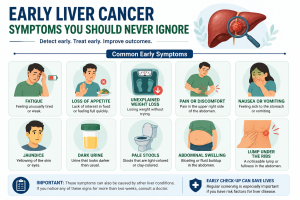
Early Symptoms of Liver Cancer
Many patients experience no symptoms initially. As the disease progresses, symptoms may include:
- Unexplained weight loss
- Loss of appetite
- Persistent fatigue
- Pain in the upper right abdomen
- Abdominal swelling
- A lump beneath the ribs
- Jaundice (yellowing of the skin and eyes)
- Dark urine
- Pale stools
- Nausea and vomiting
These symptoms can also occur with other liver conditions, so medical evaluation is essential.
How Is Liver Cancer Diagnosed?
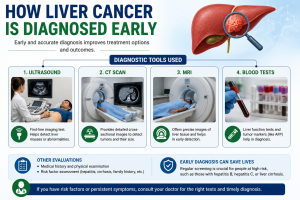
A diagnosis typically involves a combination of clinical evaluation, laboratory tests, and imaging. According to the American Cancer Society, early detection and timely treatment can improve outcomes for many patients with liver cancer.
Blood Tests
- Liver function tests (LFTs)
- Alpha-fetoprotein (AFP) tumor marker
- Viral hepatitis screening
- Complete blood count
Imaging
- Ultrasound
- Contrast-enhanced CT scan
- MRI
- PET scan (selected cases)
Liver Biopsy
A biopsy may be recommended when imaging alone cannot confirm the diagnosis.
Staging of Liver Cancer
Doctors stage liver cancer to determine its size, extent, and whether it has spread.
Common staging systems include:
- Barcelona Clinic Liver Cancer (BCLC)
- TNM staging
- Child-Pugh score (to assess liver function)
Staging helps guide the most appropriate treatment plan.
Treatment Options for Early Liver Cancer
The National Cancer Institute provides comprehensive information about liver cancer diagnosis, staging, and treatment options.
Treatment depends on:
- Tumor size
- Number of tumors
- Liver function
- Overall health
- Presence of cirrhosis
1. Liver Resection
Surgical removal of the cancerous portion of the liver is often the preferred option for patients with a single tumor and adequate liver function.
Benefits
- Potentially curative
- Preserves healthy liver tissue
- Excellent outcomes in selected patients
2. Liver Transplantation
For patients with small tumors and advanced cirrhosis, liver transplantation can remove both the cancer and the diseased liver.
This option offers excellent long-term outcomes in carefully selected patients.
3. Radiofrequency Ablation (RFA)
RFA destroys cancer cells using heat generated by radiofrequency energy. It is often recommended for small tumors when surgery is not feasible.
4. Microwave Ablation
Microwave energy is used to destroy cancer cells with precision and is another minimally invasive option for selected patients.
5. Transarterial Chemoembolization (TACE)
For patients who are not candidates for surgery, TACE delivers chemotherapy directly into the liver tumor while blocking its blood supply.
6. Targeted Therapy
Targeted drugs interfere with cancer cell growth while minimizing damage to healthy tissues. They may be recommended for advanced-stage disease.
7. Immunotherapy
Immunotherapy helps the body’s immune system recognize and attack cancer cells. It has become an important option for some patients with advanced liver cancer.
Liver Cancer Surgery: What Patients Should Know
The World Health Organization (WHO) recommends hepatitis B vaccination and hepatitis prevention strategies to reduce the global burden of liver cancer.
Hepatobiliary surgeons specialize in complex liver operations.
Modern surgical techniques include:
- Open liver surgery
- Laparoscopic liver surgery
- Robotic-assisted liver surgery (where available)
Surgery aims to remove the tumor completely while preserving as much healthy liver tissue as possible.
Recovery After Early Liver Cancer Treatment
Recovery varies depending on the procedure performed.
Patients are encouraged to:
- Walk early as advised
- Eat a balanced diet
- Avoid alcohol
- Take medications as prescribed
- Attend follow-up appointments
- Gradually resume physical activity
Most patients require regular imaging and blood tests to monitor recovery.
Can Liver Cancer Return After Early Treatment?
Yes. Even after successful treatment, liver cancer can recur, particularly in patients with chronic liver disease.
Regular follow-up may include:
- Ultrasound
- CT or MRI scans
- AFP blood tests
- Liver function tests
Ongoing surveillance helps detect recurrence early, when additional treatment may be most effective. American Association for the Study of Liver Diseases (AASLD)
How to Reduce Your Risk of Liver Cancer
While not all cases can be prevented, you can lower your risk by:
- Receiving the Hepatitis B vaccine
- Treating chronic hepatitis infections
- Maintaining a healthy weight
- Controlling diabetes
- Limiting alcohol consumption
- Avoiding smoking
- Eating a balanced diet rich in fruits and vegetables
- Exercising regularly
- Managing fatty liver disease
- Undergoing regular liver check-ups if you are at high risk
When Should You See a Hepatobiliary Surgeon for Liver Cancer ?
Consult a hepatobiliary surgeon if you have:
- A liver mass detected on imaging
- Persistent right upper abdominal pain
- Jaundice
- Elevated AFP levels
- Chronic liver disease with suspicious imaging findings
- A diagnosis of liver cancer requiring surgical evaluation
Early consultation allows for timely assessment of all available treatment options.
Frequently Asked Questions About Early Liver Cancer
1. Can liver cancer be completely cured?
Early-stage liver cancer may be cured with surgery or liver transplantation in carefully selected patients.
2. Is liver cancer always fatal?
No. Prognosis depends on the stage at diagnosis, liver function, and treatment. Early detection significantly improves outcomes.
3. What is the first symptom of liver cancer?
Many people have no symptoms initially. When symptoms occur, they may include fatigue, weight loss, abdominal pain, or jaundice.
4. Can fatty liver disease lead to liver cancer?
Yes. Advanced fatty liver disease, particularly when it progresses to cirrhosis, can increase the risk of liver cancer.
5. Who should undergo liver cancer screening?
People with cirrhosis, chronic hepatitis B or C, and certain other high-risk conditions should discuss regular screening with their healthcare provider.
6. Can liver cancer return after surgery?
Yes. Regular follow-up imaging and blood tests are important to detect any recurrence early.
7. What treatments are available if surgery is not possible?
Depending on the stage and overall health, options may include ablation, TACE, targeted therapy, immunotherapy, or radiation therapy.
8. Does every liver tumor mean cancer?
No. Many liver lesions are benign. A specialist will determine whether a liver mass requires treatment through imaging and, in some cases, biopsy.
Conclusion
Can liver cancer be cured if detected early? In many cases, yes. Early diagnosis opens the door to potentially curative treatments such as liver resection or liver transplantation and can greatly improve long-term outcomes.
If you have risk factors such as chronic hepatitis, cirrhosis, or fatty liver disease, regular screening and prompt medical evaluation are essential. Advances in hepatobiliary surgery, imaging, and cancer therapies have transformed the outlook for many patients with liver cancer.
If you experience persistent symptoms or have been diagnosed with a liver lesion, consult a qualified hepatobiliary surgeon to discuss the most appropriate diagnostic tests and treatment options. Early action can make a meaningful difference in both quality of life and survival.
Need Expert Advice?
If you or a loved one has been diagnosed with liver cancer or is experiencing symptoms, don’t delay seeking medical attention. Early diagnosis and timely treatment can make a significant difference.
📞 Call: 9801875750
📍 Visit: Bishwojyoti Mall, Jamal, Kathmandu, Nepal
🔗 Get Directions & Book an Appointment: https://nihs.com.np/contact-us