
Gallstones: Symptoms, Causes & Treatment
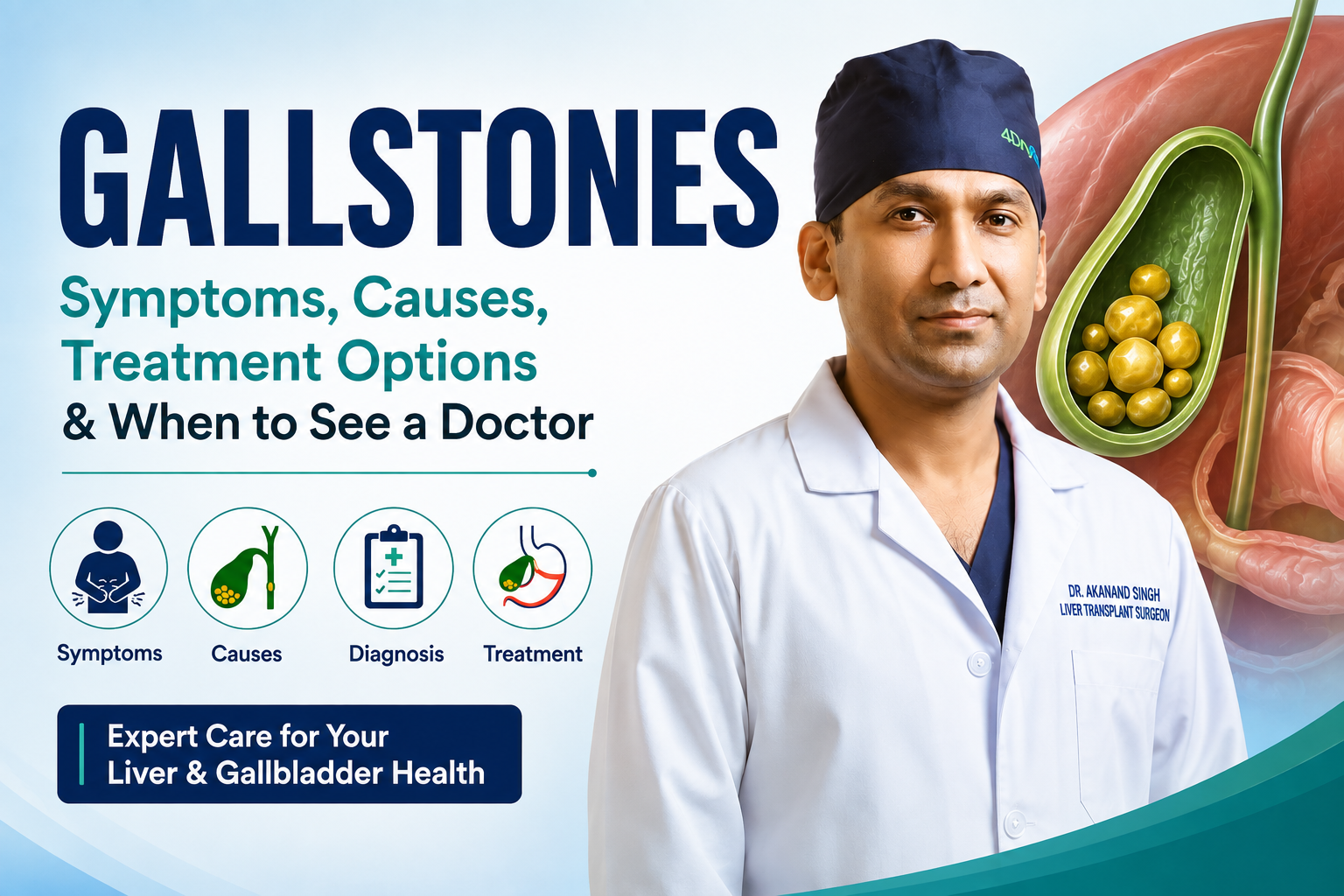
Gallstones: Symptoms, Causes, Treatment Options & When to See a Doctor
Gallstones are hardened deposits that form inside the gallbladder and may cause abdominal pain, nausea, vomiting, and other digestive symptoms. Understanding gallstones, their causes, symptoms, and treatment options can help you know when to seek medical care.
Understanding the symptoms of gallstones, their causes, risk factors, diagnosis, and treatment options can help you recognize when it is time to seek medical attention.
At NIHS Kathmandu, patients can access liver and hepatobiliary health services, including specialist care from Dr. Akanand Singh, Hepatobiliary & Liver Transplant Surgeon. Dr. Singh has specialized training and experience in hepatobiliary-pancreatic surgery and minimally invasive surgical techniques.
What Are Gallstones?
Gallstones, medically known as cholelithiasis, are hard, stone-like particles that form inside the gallbladder. They can range in size from very small particles to larger stones.
The gallbladder is a small, pear-shaped organ located beneath the liver. Its main function is to store and concentrate bile, a digestive fluid produced by the liver. When you eat, the gallbladder releases bile into the small intestine to help digest fats.
Gallstones can form when there is an imbalance in the substances that make up bile. The two main types are:
- Cholesterol stones: Usually yellow-green and primarily composed of hardened cholesterol.
- Pigment stones: Usually darker and associated with bilirubin.
Some people may have one stone, while others may develop multiple stones.
What Causes Gallstones?
Gallstones do not have one single cause. They develop when the composition of bile becomes unbalanced or when the gallbladder does not empty normally.
Gallstones may develop when:
- Bile contains too much cholesterol
- Bile contains too much bilirubin
- There are insufficient bile salts
- The gallbladder does not empty properly
- A person experiences rapid weight loss
- Certain medical conditions increase the risk
However, having one or more risk factors does not necessarily mean that a person will develop gallstones.
Who Is More Likely to Develop Gallstones?
Several factors can increase the likelihood of developing gallstones.
1. Being overweight or having obesity
Excess body weight can increase the risk of gallstone formation.
2. Rapid weight loss
Losing weight very quickly, including after certain weight-loss procedures, may increase the risk of gallstones.
3. Age
The risk of gallstones generally increases with age.
4. Family history
People with a family history of gallstones may have a higher risk.
5. Certain medical conditions
Conditions affecting the liver, blood, metabolism, or digestive system can increase the likelihood of gallstones.
6. Diet and lifestyle
A diet high in calories and refined carbohydrates and low in fiber may contribute to gallstone risk. Maintaining a healthy weight and following a balanced eating pattern can help reduce risk.
What Are the Symptoms of Gallstones?
Many people with gallstones have no symptoms at all. These are sometimes called silent gallstones and may be discovered incidentally during an ultrasound or other imaging test.
Symptoms usually occur when a gallstone blocks a bile duct.
Common symptoms may include:
Sudden abdominal pain
A gallbladder attack may cause sudden pain in the upper-right or upper-middle abdomen.
The pain may sometimes spread toward the back or right shoulder area.
Pain after meals
Some people notice symptoms after eating, particularly following a heavy or fatty meal.
Nausea and vomiting
Gallstone attacks can be associated with nausea and vomiting.
Abdominal discomfort
Some patients may experience bloating, indigestion, or discomfort, although these symptoms can have many other causes.
Recurrent attacks
A person who has experienced one gallbladder attack may experience additional episodes.
It is important to remember that abdominal pain does not automatically mean that you have gallstones. Several digestive and abdominal conditions can produce similar symptoms. Proper medical evaluation is therefore important.
When Should You Seek Medical Attention?
Gallstone symptoms should not always be ignored, particularly when pain is severe, persistent, or associated with other warning signs.
Seek prompt medical evaluation if you experience:
- Severe or persistent abdominal pain
- Fever or chills
- Repeated vomiting
- Yellowing of the eyes or skin
- Dark urine
- Pale-colored stools
- Significant tenderness in the abdomen
- Abdominal pain associated with feeling very unwell
These symptoms can indicate complications involving the gallbladder, bile ducts, liver, or pancreas.
Gallstones can sometimes lead to gallbladder inflammation, bile duct infection or obstruction, and gallstone-related pancreatitis.
Can Gallstones Cause Complications?
Yes. While many gallstones remain asymptomatic, stones that obstruct the biliary system can cause complications.
Possible complications include:
Acute cholecystitis
A gallstone can obstruct the gallbladder outlet and cause inflammation of the gallbladder.
Bile duct obstruction
A stone can move from the gallbladder into the common bile duct and obstruct the normal flow of bile.
Cholangitis
Obstruction of the bile ducts can contribute to serious infection of the biliary system.
Gallstone pancreatitis
If a stone obstructs the area where the bile and pancreatic ducts drain, it can trigger inflammation of the pancreas.
These complications can require urgent medical assessment and treatment.
How Are Gallstones Diagnosed?
Doctors usually diagnose gallstones using a combination of your symptoms, medical history, physical examination, blood tests, and imaging.
Ultrasound
An abdominal ultrasound is commonly used to look for gallstones and assess the gallbladder.
Blood tests
Blood tests may help identify signs of inflammation, infection, or problems involving the liver, bile ducts, or pancreas.
Additional imaging
Depending on the patient’s symptoms and suspected location of the stone, additional imaging may be recommended.
For example, MRI/MRCP or endoscopic ultrasound can be considered in selected patients when doctors need more information about possible common bile duct stones.
The appropriate test depends on the individual patient’s symptoms and clinical findings.
Do All Gallstones Need Treatment?
No.
If gallstones are discovered incidentally and are not causing symptoms, treatment may not always be necessary.
However, symptomatic gallstones or gallstones causing complications may require treatment.
The decision depends on factors such as:
- Symptoms
- Number and location of stones
- Gallbladder inflammation
- Whether stones have entered the bile duct
- Presence of complications
- Overall health
- Surgical risk
SAGES notes that asymptomatic gallstones generally are not an indication for laparoscopic gallbladder removal, whereas symptomatic gallstone disease and complications can be indications for surgery.
What Are the Treatment Options for Gallstones?
Treatment depends on whether the gallstones are causing symptoms or complications.
1. Observation
People with silent gallstones may not require immediate treatment.
A doctor may recommend observation and explain which symptoms should prompt medical attention.
2. Laparoscopic Cholecystectomy
For many patients with symptomatic gallstones, the standard surgical treatment is cholecystectomy, or removal of the gallbladder.
A laparoscopic cholecystectomy is performed through small incisions using specialized instruments and a camera.
It is widely used for treating symptomatic gallstone disease and is generally preferred over traditional open surgery when appropriate.
3. Open Gallbladder Surgery
In certain situations, an open operation may be necessary.
This may be considered when there is severe inflammation, scarring, complex anatomy, or other circumstances that make laparoscopic surgery unsuitable or unsafe.
The surgical approach is determined by the treating surgical team based on the individual patient.
4. ERCP
Endoscopic Retrograde Cholangiopancreatography (ERCP) is an endoscopic procedure that can be used in selected patients when a gallstone is stuck in the common bile duct.
ERCP is different from gallbladder removal. In appropriate cases, it can help remove a stone from the bile duct before or around the time of gallbladder surgery.
5. Medication
Certain medicines may be used in special situations to dissolve specific cholesterol gallstones, particularly when surgery is unsuitable.
However, this approach is not appropriate for everyone, may take a long time, and gallstones can return after treatment.
Therefore, medication is generally reserved for selected patients under medical supervision.
Is Gallbladder Removal Safe?
Gallbladder removal is a commonly performed surgical procedure.
The gallbladder is not an essential organ, and most people can live normally after it has been removed. After surgery, bile produced by the liver continues to reach the small intestine through the bile ducts rather than being stored in the gallbladder.
As with any surgery, however, complications are possible. Your surgeon should explain the potential benefits, risks, alternatives, and expected recovery before the procedure.
Can You Live Without a Gallbladder?
Yes.
The gallbladder stores bile, but it is not essential for survival. After gallbladder removal, the liver continues to produce bile.
In many patients, the body adapts well after surgery and normal daily activities can be resumed according to the surgeon’s recovery instructions.
Some patients may temporarily experience changes in bowel habits following surgery. These symptoms are often manageable, but persistent problems should be discussed with a healthcare professional.
How Can You Reduce the Risk of Gallstones?
Gallstones cannot always be prevented, but healthy lifestyle habits may help reduce risk.
Maintain a healthy weight
If you are overweight, gradual and sustainable weight loss may be preferable to rapid weight loss.
Avoid crash diets
Rapid weight loss can increase the risk of gallstone formation.
Eat a balanced diet
Include fiber-rich foods and maintain a balanced intake of healthy fats while limiting excessive refined carbohydrates and added sugars.
Stay physically active
Regular physical activity can support healthy weight management and overall metabolic health.
Discuss weight-loss plans with a healthcare professional
If you are planning significant weight loss, especially after bariatric surgery, ask your healthcare team about your individual risk of gallstones.
Gallstones vs. Other Causes of Abdominal Pain
Gallstone pain can sometimes be confused with other digestive conditions.
Upper abdominal pain may also occur because of:
- Gastritis
- Peptic ulcer disease
- Acid reflux
- Pancreatitis
- Liver-related conditions
- Intestinal problems
- Musculoskeletal pain
This is why self-diagnosis is not recommended.
If you repeatedly experience abdominal pain, particularly after meals or with nausea and vomiting, consult a qualified healthcare professional for appropriate evaluation.
When Should You See a Gallbladder Specialist?
Consider consulting a specialist if you:
- Have recurrent upper abdominal pain
- Have been diagnosed with gallstones
- Experience repeated gallbladder attacks
- Have abnormal liver tests
- Have jaundice
- Have suspected bile duct stones
- Have gallbladder inflammation
- Have been advised to consider gallbladder surgery
- Have a history of gallstone-related pancreatitis
Early assessment can help identify whether observation, further testing, medication, endoscopic treatment, or surgery is appropriate.
Why Choose NIHS Kathmandu for Hepatobiliary Care?
NIHS Kathmandu provides specialized healthcare services, including liver health services, diagnostic facilities, and specialist care. Its liver health service lists Dr. Akanand Singh among its specialist doctors.
Dr. Akanand Singh is a Hepatobiliary & Liver Transplant Surgeon with specialized training and experience in hepatobiliary-pancreatic surgery and minimally invasive techniques. His professional background includes more than a decade of specialized training and experience in liver transplantation and hepatobiliary surgery.
For patients experiencing recurrent abdominal pain, suspected gallstones, gallbladder disease, or other hepatobiliary conditions, specialist evaluation can help determine the most appropriate next step.
Frequently Asked Questions About Gallstones
1. What are the first signs of gallstones?
Some people have no symptoms. When gallstones cause problems, common symptoms include sudden pain in the upper-right or upper-middle abdomen, nausea, and vomiting.
2. Can gallstones go away on their own?
Gallstones generally do not simply disappear on their own. Silent gallstones may not require treatment, while symptomatic stones may require medical or surgical treatment.
3. Is gallstone surgery always necessary?
No. People with asymptomatic gallstones often do not need surgery. However, symptomatic gallstones and certain complications may require gallbladder removal.
4. Can I live normally without my gallbladder?
Yes. The gallbladder is not essential, and most people can live normally after gallbladder removal.
5. What happens if gallstones are left untreated?
Silent gallstones may remain harmless, but symptomatic or obstructing gallstones can cause complications such as gallbladder inflammation, bile duct problems, infection, or pancreatitis.
6. Can gallstones cause back pain?
Gallbladder pain can sometimes radiate toward the back or shoulder area. However, back pain has many possible causes, so persistent pain should be medically evaluated.
7. What test is best for detecting gallstones?
Ultrasound is commonly used to evaluate the gallbladder and detect gallstones. Depending on the clinical situation, additional imaging may be necessary.
8. Can diet dissolve gallstones?
Dietary changes can help support a healthy weight and may reduce some risk factors, but diet does not reliably dissolve established gallstones. Certain medications may dissolve specific cholesterol stones in selected patients.
9. What is laparoscopic cholecystectomy?
Laparoscopic cholecystectomy is a minimally invasive operation to remove the gallbladder using small incisions and specialized instruments.
10. When is gallstone pain an emergency?
Severe or persistent abdominal pain, particularly when accompanied by fever, repeated vomiting, jaundice, or significant illness, requires prompt medical evaluation because these symptoms can indicate complications.
Final Thoughts
Gallstones are common, and many people may have them without knowing it. However, when gallstones cause repeated pain or complications, they should not be ignored.
Recognizing symptoms such as upper abdominal pain, nausea, vomiting, jaundice, and fever can help patients seek medical attention at the right time.
Treatment is not the same for everyone. Some people with silent gallstones may simply need observation, while patients with symptomatic or complicated gallstone disease may require surgery, endoscopic treatment, or another individualized approach.
If you have recurrent abdominal pain or have recently been diagnosed with gallstones, consult a qualified specialist to understand your condition and treatment options.
For hepatobiliary and gallbladder-related evaluation, patients can consult Dr. Akanand Singh at NIHS Kathmandu.
Medical Disclaimer
This article is intended for general educational purposes and should not replace a medical consultation, diagnosis, or individualized treatment plan. Gallstone symptoms can resemble those of other medical conditions. If you have severe, persistent, or worsening symptoms, seek appropriate medical attention promptly.